Today we moved on from Penzance, traveling more towards the center of Cornwall as we drove north. Our B&B had been lovely, but parking was a bit tricky. Yesterday morning, we went to hop in the car, and it was quite apparent that there had been a nest of birds in the tree above, making quite a mess.
Well, today, although the car was parked right out front, but somewhat under a tree, there was some sort of sticky substance covering it. I noticed it as soon as I went to open the door and my fingers stuck to it. Yuck! So, between both the birds and the trees, the film wasn't budging off the windshield with the wipers. So, Marty headed to a car wash.
Let me just say, when it comes to car wash facilities, we Americans are getting short changed. Marty opted for the cheapest wash: £6.00 and we waited to see what that entailed.
Well, before even entering the washing station, an attendant hosed down every surface of the car, taking extra attention to any spots on the windshield that shouldn't be there. Then, he took a large soapy brush, and scrubbed down the back of the vehicle by hand. (That never happens at our local car wash.)
Finally, it was time to go through the station, where we watched soft finger-like projects rolling over at all conceivable angles. Finally, these large, fluffy, felt like extensions softly brushed back and forth to help to dry off the vehicle. It made me wonder what kind of service comes with the luxury versions!
It was all quite fun, and now, the car sparkles again!
We then headed to Trelissick House and Gardens.
This particular house had been owned by a family connected with the Cornish Mining Industry, built in 1755. The ground floors were open for touring, and there was a tea room that let the patrons enjoy their delights in several of the rooms on that floor, some with a beautiful view of the Fal estuary.
I thought that was a very nice touch, and certainly different from most of the National Trust Tea Rooms.
Over time, the house went through several families, when it was spotted by a wealthy banker, Leonard Cunliffe, in the 1900s while sailing his Yacht. He rented the house and finally purchased it in 1918. He passed the house onto his step-daughter, Ida Copeland, when he passed in 1937.
Ida was married to Ronald Copeland, who was the chairman of the Spode Copeland china works. Some may recognize the name, Spode, and its connection to find china. When Ida married Ronald, Josie Spode gifted them a set of the fine dinnerware. Here is a sample of one of the pieces.
Cunliffe had been a collector, and the drawing room had several items that would be significant collector's items. There was a 105 year old piano in the back corner, and many fine embroideries along the walls.
Ida and Richard vacationed in Trelissick House in the summers. They donated the estate to the National Trust, but continued to live in the house and enjoy the walled garden. Eventually, Ida's grandson, William decided to forego it as a summer home and donated it to the National Trust in 2012.
I could have just posted this picture, and you would have learned the entire history! Very clever, indeed.
The house boasts these long columns that actually sit along the side of the house, overlooking the estuary.
There was a solarium at the far end filled with tropical plants of different varieties.
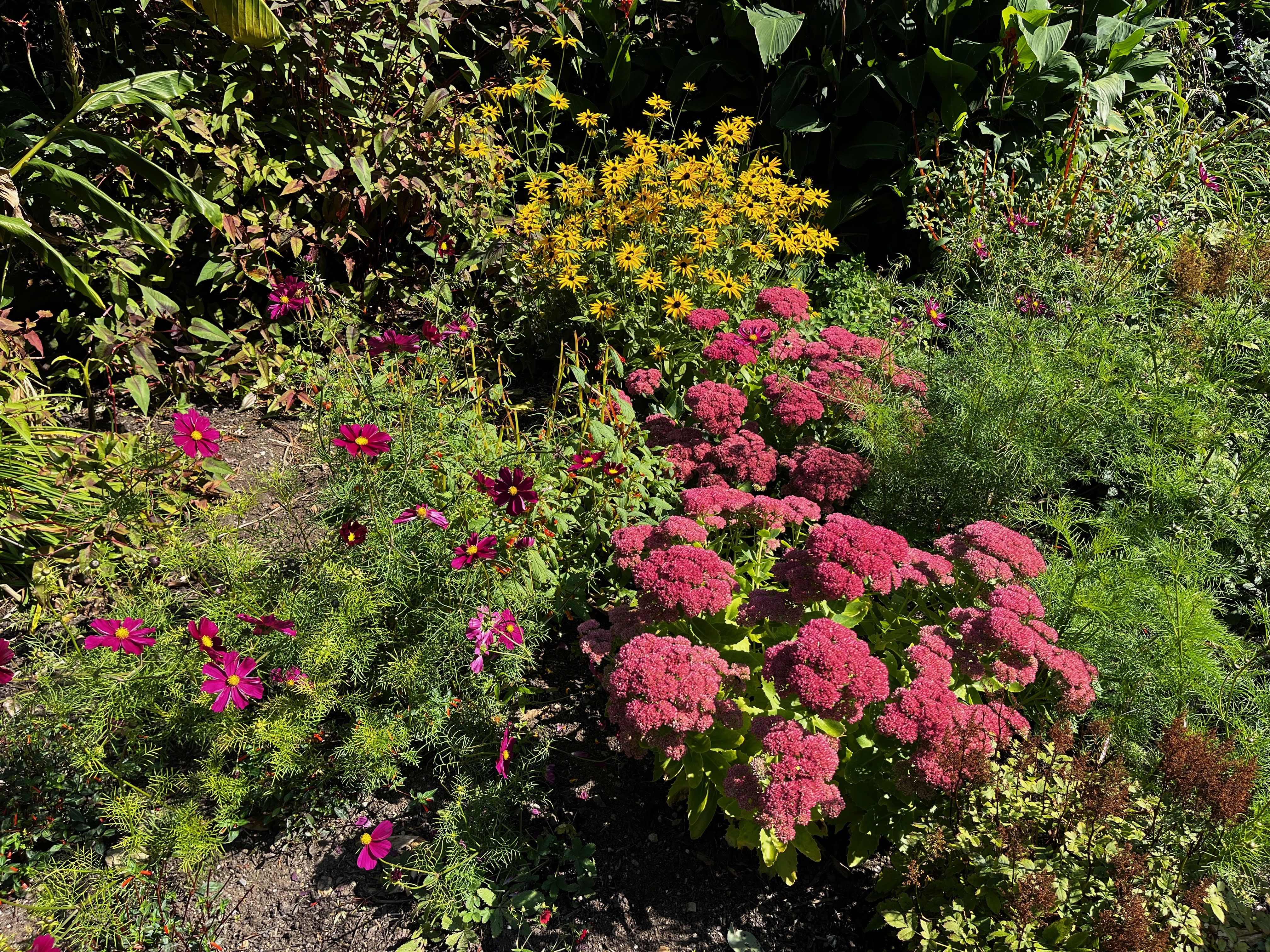
And the gardens feature a myriad of subtropical plants like so many of the others in this area.
This tree came from Japan and was planted in 1898!
Once again, it was so interesting to walk through these gardens interspersed with tropical plants that I never would have expected to see.
I took one more shot of the back, and we headed to the exit.
But not before spotting the amaryllis in bloom!
and this very entertaining squirrel weather vane atop this tower.
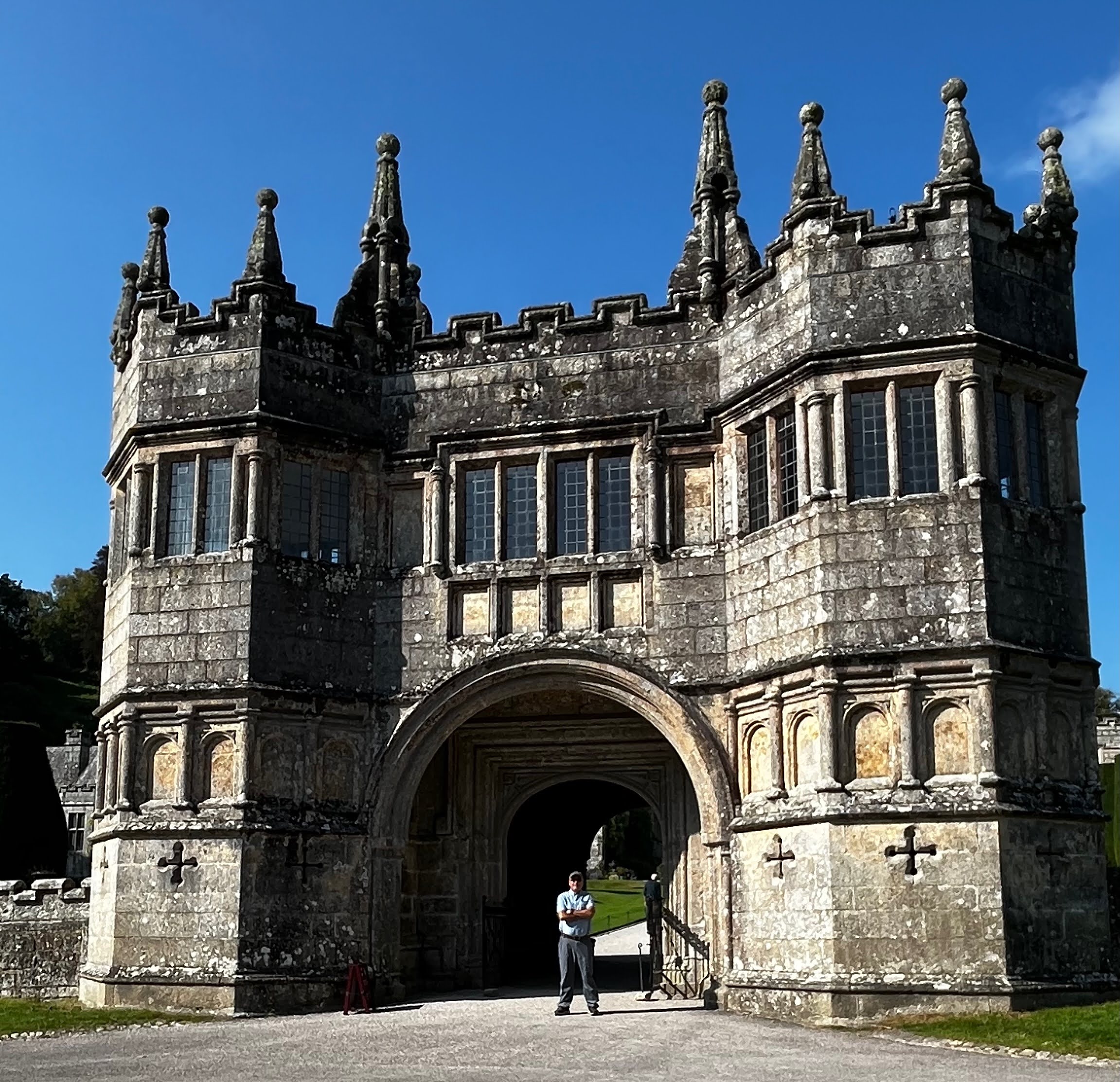
From here we headed to an entirely different type of house, an Elizabethan Manor. The name is Trerice, but we were told that it was pronounced "Ter rease" . I'm not sure what happened to that first "r".
Trerice was inherited by John Arundell who began the building of the house in 1572.
It was passed down through families until the line died out. It was then rented out to tenant farmers, where it became in somewhat of a derelict state. The National Trust had received a grant to purchase an estate in this area at the same time that a man named John Elton was interesting in renting for himself. A deal was made, and Elton rented from the National Trust, while he spent thousands of his own dollars improving the condition of the house.
The previous owner who sold the house to the trust, had an auction in 1953 where he sold off the contents of the home, so everything in it is from the National Trust Collection, but it is not original to the house.
However, there are solid features that have been preserved.
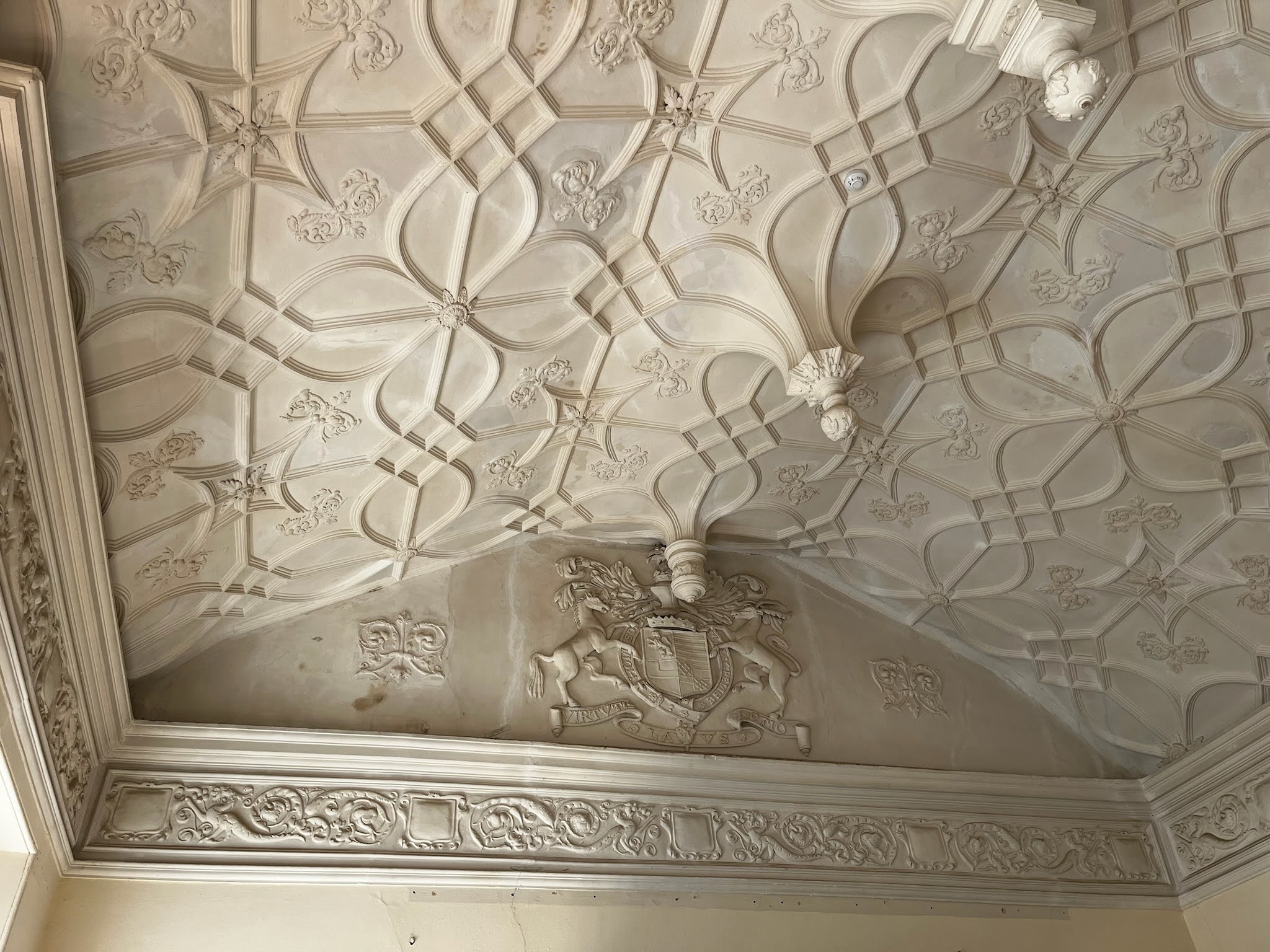
There was an Elizabethan Garden in the back of the house. The main hall has a fireplace that is dated 1572. All of the plaster work in the room, including the ceiling, is original to the house.
An upstairs bedroom boasts the same time of plaster work, also original to the house.
and there is a large gallery window that overlooks the Elizabethan gardens.
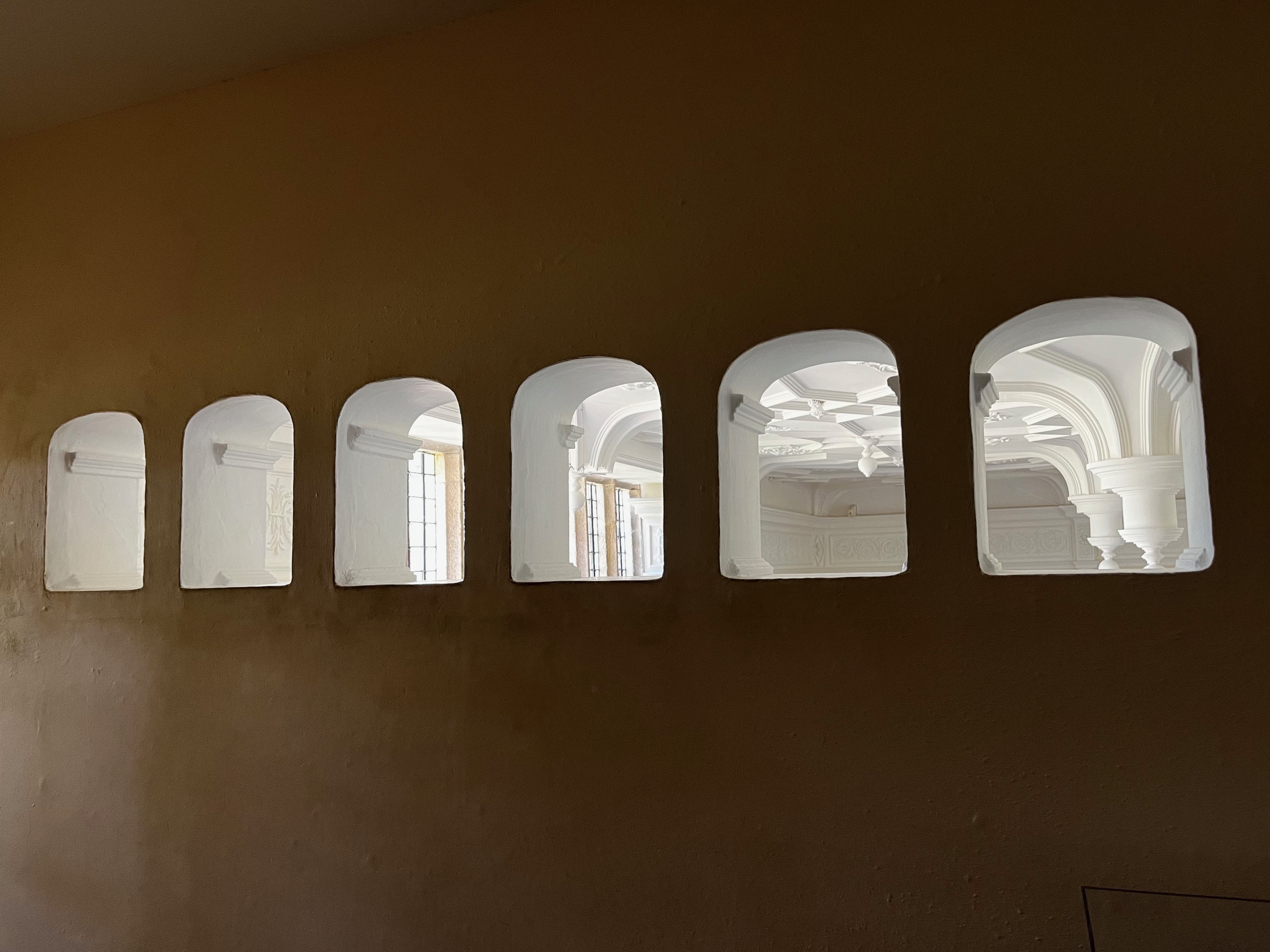
We walked down a very long hall and around the corner to the "musicians" room. There were cubby holes cut out of one wall, along the ceiling.
When I peeked through, I realized that I was looking at the ceiling in the great hall! I can only imagine how beautiful the voices must have sounded echoing through the room.
Finally I spotted an emblem with a Chough, which is a bird that is native to Cornwall. During World War II, Trerice was a training center for the local guard who was nicknamed "The Choughs". Their motto was "Eyes Everywhere".
Since none of the holdings in the house were original, the National Trust decorators decided to have each room reflect a different time period as one walks through the house. The last one was decorated as 1960, which was certainly quite a contrast from the main hall which was 1572! But it was a unique decorating scheme all the same, and people did live in the house through that time period.
Here's one more photo highlighting the front of the house.
We decided that it was time for a cream tea, and so we sat outside to enjoy the beautiful weather and relish in our delectable delights.
Then we hit the road and drove to our B&B. It's a very large manor home which is way off the beaten track. In fact, we ended up originally in the farmer's driveway next door, but he was very understanding and happy to direct us to the right location.
A young couple run the place and they were quite welcoming and soon showed us to our very large room which is really quite comfortable. The name of the house is Costislost, which I originally thought was a play on words, but the cost wasn't lost, in case you wondered. After a quick search, it turns out that it has had that name well into the 1800's. I'll have to see if I can learn more from the owners in the morning.
I'll keep you posted....